

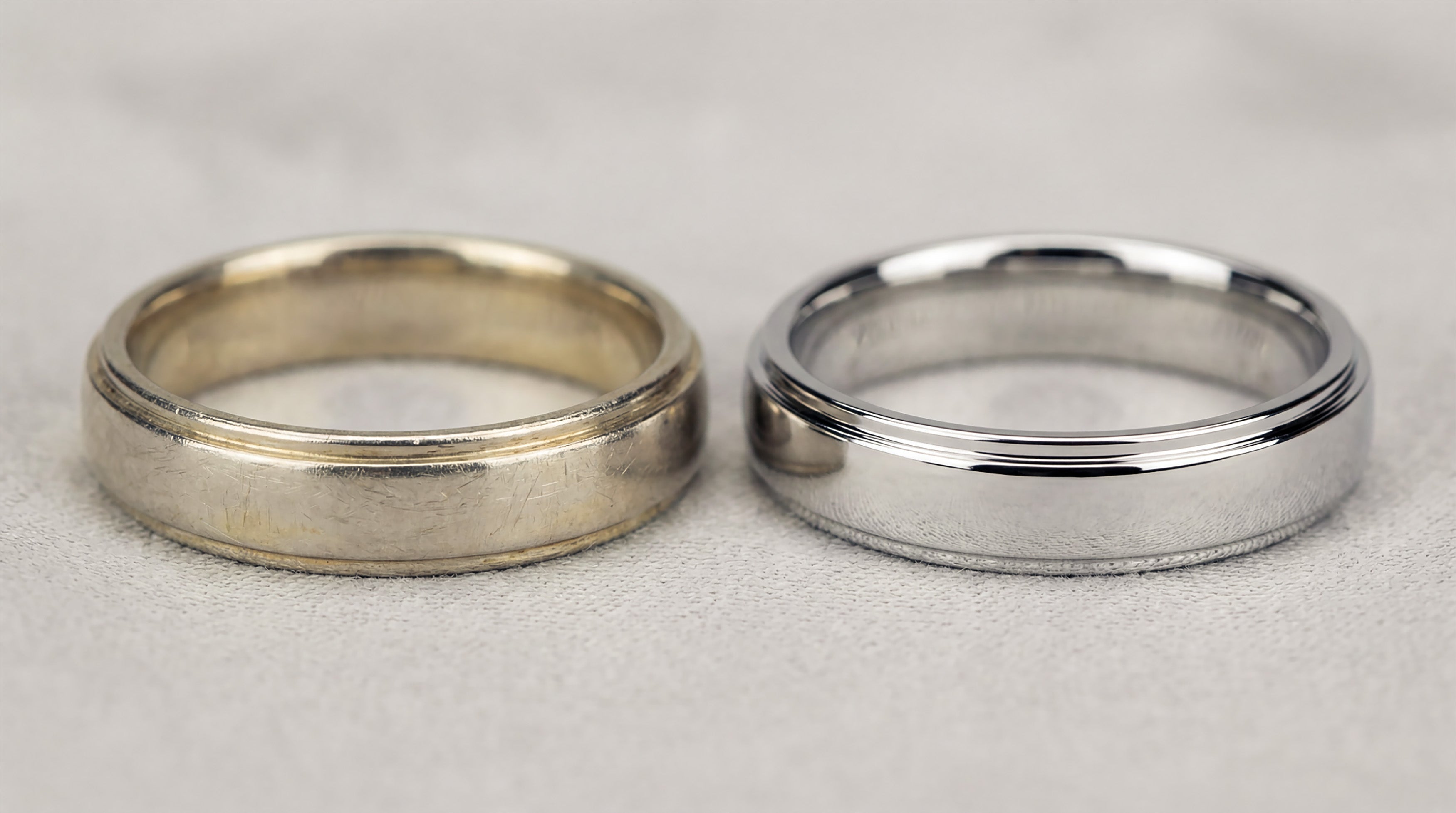
Why Your White Gold Jewelry is Turning Yellow
You've pulled out a piece you love—maybe an engagement ring, a bracelet you wear daily—and noticed it doesn't look the way it used to. That bright, crisp white has shifted. There's a warm, yellowish cast creeping in. And you're wondering if something's wrong.
Nothing's wrong. This is what white gold does.
As a gemologist and someone who's worked with precious metals for decades, I can tell you this is one of the most common concerns I hear in my atelier. And it's completely normal. But that doesn't mean you're stuck with it. Understanding why white gold turns yellow—and what you can do about it—gives you control over how your jewelry ages.
White Gold vs Yellow Gold: What You're Actually Wearing
Let me start with what white gold actually is, because most people don't realize it's not naturally white.
All gold starts out yellow. To create white gold, we alloy pure gold with metals like palladium, silver, or nickel. These white metals dilute the natural yellow and give the finished piece that cool, neutral tone you're drawn to. Yellow gold, on the other hand, keeps more of its pure gold content and retains that warm, golden glow.
Both are beautiful. Both are durable when made well. The difference is mostly about what speaks to you visually—and how much maintenance you're willing to do. White gold requires a bit more care to maintain its color. Yellow gold is lower maintenance but has a look that doesn't suit everyone.
If you're weighing the two, it really comes down to your aesthetic and your lifestyle. But if you already own white gold and you're noticing discoloration, let's talk about why that's happening.
How White Gold Turns Yellow

Here's the reality: most white gold jewelry isn't actually white all the way through. It's coated. And over time, that coating wears away.
Even the highest-quality white gold alloy has a faint warm undertone because gold itself is yellow. To get that icy, platinum-like finish, jewelers plate white gold with a metal called rhodium. Rhodium is naturally bright white, extremely reflective, and creates that flawless surface you see when a piece is new.
But rhodium plating isn't permanent. It's a thin layer, and it wears down with use. When it does, the underlying white gold alloy—which has a slight yellow tint—starts to show through. That's what you're seeing when your white gold jewelry changes color.
It's not damaged. It's not fake. It's just lived-in.
Does White Gold Tarnish?
Not in the way silver does. White gold doesn't develop that dark, oxidized patina you see on tarnished silver. What it does lose is its rhodium plating—the thin, bright white coating that gives white gold that fresh-from-the-jeweler look. As the rhodium wears away, the natural warmth of the gold alloy underneath becomes visible. So while it's not technically tarnishing, the color shift can make it appear dull or yellowish over time.
The Causes of Discoloration in White Gold Jewelry
White gold doesn't tarnish the way silver does, but it does lose its brilliance for a handful of very specific reasons. If you know what accelerates the process, you can slow it down—and in some cases, avoid it altogether.
Rhodium Plating Wear
This is the big one. Rhodium plating wears off naturally with friction—against your skin, your clothes, other surfaces. Rings are especially vulnerable because they're constantly in contact with your hands. Over time, the plating thins out and reveals the warmer-toned gold underneath.
Alloy Composition
Not all white gold is created equal. The ratio of gold to other metals matters. A higher gold content (like 18k white gold) will show more yellow as the rhodium wears off compared to 14k, which contains more white alloying metals. It's a trade-off: higher karat gold is softer and richer, but it also shows its true color more quickly.
Chemical Exposure
Chlorine is the enemy. So is bleach, harsh cleaning products, and even some lotions or perfumes. These chemicals don't just dull the surface—they can actually break down the rhodium layer faster. If you swim in pools, clean with strong agents, or apply products directly onto your jewelry, you're speeding up the discoloration process.
Heat Exposure
Hot tubs, dishwashers, steam from cooking—high heat weakens rhodium plating and can cause it to break down prematurely. If you're wearing your rings while washing dishes in scalding water or soaking in a jacuzzi, that's contributing to the yellowing you're seeing.
Body Chemistry
This one surprises people, but it's real. Your skin's pH, the oils you produce, even how much you sweat—it all interacts with your jewelry differently. I've seen two people wear the same ring, and one person's will yellow in six months while the other's stays white for two years. It's not about caring more or less. It's just chemistry.
Age and Wear
White gold jewelry that's worn every day will naturally start changing color over time. Scratches, nicks, and general wear all expose more of the underlying alloy. There's no way around this—it's the cost of living with a piece you love. But it's also fixable.
How to Keep Your White Gold Jewelry Stunning
You can't stop rhodium from wearing off eventually, but you can absolutely extend the time between replating and keep your pieces looking sharp.
Professional polishing and replating is the most effective solution. At Demirjian, we recommend bringing in your white gold pieces every 12 to 18 months for maintenance. During that visit, I'll assess the condition of the rhodium, polish out any surface scratches, and replate the piece so it looks like new again. This isn't just cosmetic—it's protective. A fresh layer of rhodium shields the gold beneath and restores that crisp, reflective finish.
Gentle cleaning goes a long way. I tell clients to avoid ultrasonic cleaners at home and skip the harsh jewelry dips. Instead, use warm water, a drop of mild dish soap, and a soft brush. That's it. Rinse well, pat dry with a lint-free cloth, and you're done. Simple care prevents buildup that dulls the surface and wears down plating faster.
Proper storage protects your jewelry when you're not wearing it. Keep pieces in a fabric-lined box or individual pouches so they're not knocking against each other. Metal-on-metal contact creates micro-scratches that expose the alloy and accelerate discoloration.
If you want your white gold to stay white, treat it like what it is: a precision-crafted piece that benefits from thoughtful care.
When to Replace Your White Gold Jewelry
Sometimes replating isn't enough.
If the structure of a piece has been compromised—prongs are worn down, the band is too thin, or there's significant damage to the setting—it may not be worth restoring. I've had clients bring in rings that have been replated a dozen times, but the metal itself is exhausted. At that point, we're talking about refabrication or starting fresh.
Or maybe the piece just doesn't reflect who you are anymore. Styles change. Your taste evolves. A ring you loved ten years ago might not suit the way you live or dress now. If that's the case, you're not obligated to keep wearing it out of guilt or sentimentality.
White gold jewelry will turn yellow. That's not a flaw—it's the nature of the material. But with regular care, professional maintenance, and a little awareness of what accelerates wear, you can keep your pieces looking exactly the way you want them to.
If you're noticing discoloration and you're not sure what to do next, book an appointment and come by our atelier. I'll take a look, explain what's happening, and walk you through your options—whether that's replating, redesign, or just better daily habits. At Demirjian Jewelry Design, I work directly with every client. Just honest guidance from someone who understands both the craft and the meaning behind what you wear.

Leave a comment
This site is protected by hCaptcha and the hCaptcha Privacy Policy and Terms of Service apply.