

What Is Fine Jewelry & What Makes It Valuable?
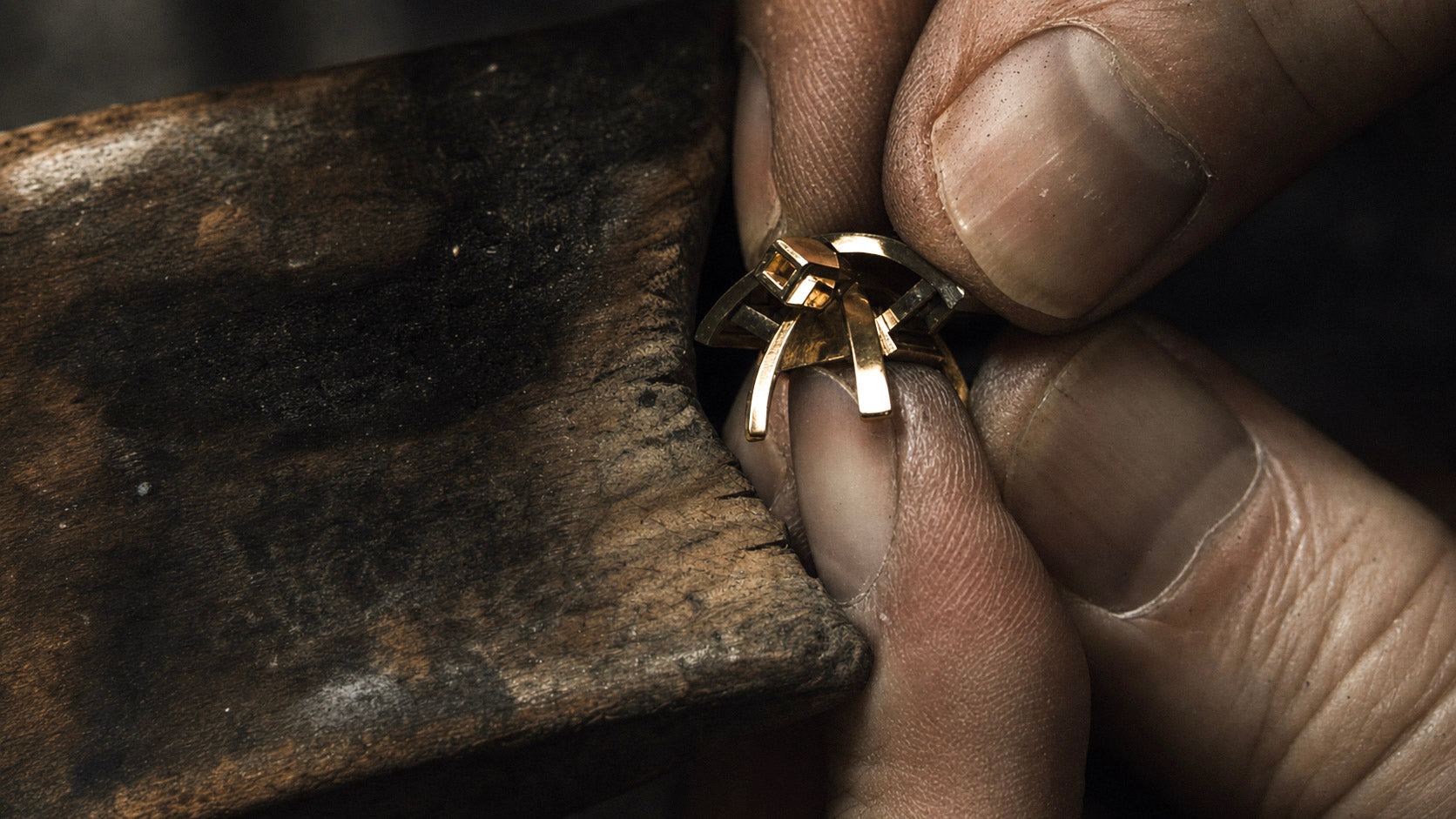
Run your thumb along the edge of a well-made ring. You feel nothing — no catch, no rough spot, no place where the metal snags. The surface is even, and where a polished face meets a brushed one, the line is clean enough to see. That edge took longer to make than the casting did, and almost no one who wears the ring will ever know it is there.
This is the kind of thing a jeweler notices and most people walk right past. Not because it is hidden. Because no one ever taught them to look for it.
A gemstone usually catches the eye first, and that is understandable. But it is rarely the first thing I notice. I look at proportion, balance, finishing, construction, and the way all of them relate to one another. Over a lifetime at the bench you learn that quality is almost never found in a single detail. It shows up in a collection of decisions that work together, whether you are looking at a simple gold band, a custom engagement ring, a platinum bracelet, or a gemstone commission made for one person.
A good piece of jewelry works the way a good suit does. Its worth comes from several things at once: the cloth, the canvas inside it, whether it was sewn by hand, how it fits one body, the house that made it. Anyone who has worn a suit made to measure knows it is a different thing from one off the rack. Not better in a single way. Better in several, at the same time. Here is how to read a piece of jewelry the same way.
Why a Great Gemstone Doesn't Make Great Jewelry
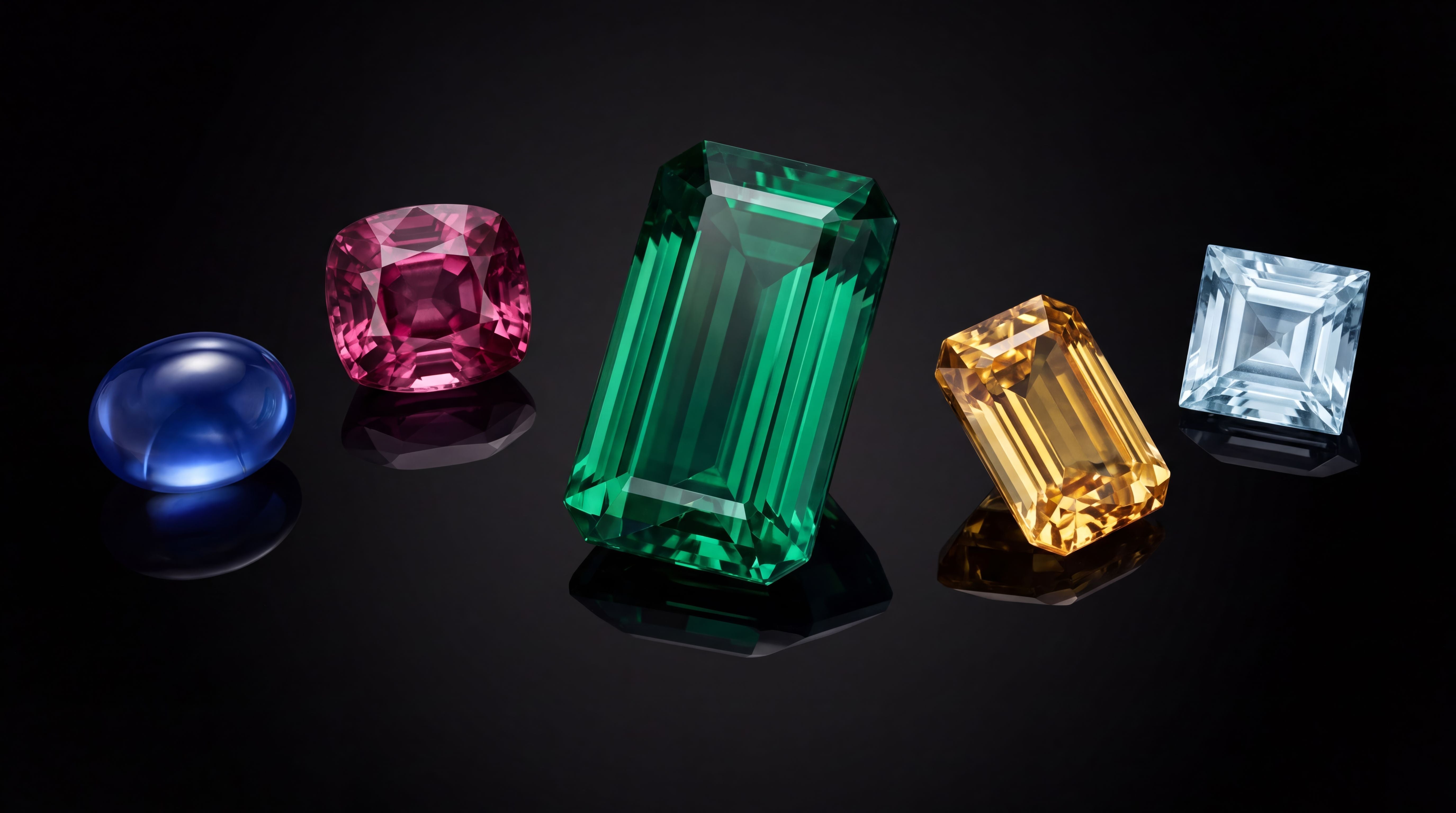
When most people admire a piece, their attention goes straight to the gemstone. That is fair. A fine sapphire, emerald, diamond, or spinel will draw the eye across a room. But one of the first lessons in this trade is that an exceptional gemstone does not, on its own, make exceptional jewelry. Over the years I have seen beautiful stones set into designs that never let them reach their potential, and it is always a quiet shame.
The same gemstone can feel like a completely different stone depending on the setting around it, the proportions of the design, and the hands that bring it to life. A good part of my work is making sure that never happens to a client's stone. The design is chosen for the stone and the stone for the person, so the two belong together from the start.
Materials matter, and they always will. A gemologist can tell you exactly what a stone is and where it came from, and you should expect that of anyone who sells you one. But the stone is the beginning of the story, not the whole of it.
What to Look for in Fine Jewelry
Most people look at jewelry. With time, you learn to see it. Take a ring and turn it slowly under a light. Watch how the surfaces meet one another, and notice whether the metal frames the gemstone or competes with it. These things rarely appear on a grading report, yet they are often exactly what separates competent work from exceptional work.
How to Evaluate the Craftsmanship of a Luxury Jewelry Piece
The finest craftsmanship does not announce itself. It reveals itself slowly, and the longer you look, the more you notice. You do not need to be a jeweler to do this. The next time a piece is in your hands, run through a short list:
- The Edges: Run a finger along them. They should feel smooth and intentional, never sharp or unfinished.
- The Surfaces: Polished areas should be even and bright. Brushed areas should be consistent, with no stray marks.
- The Transitions: Where one surface meets another, the line should be crisp and deliberate.
- The Setting: The stone should sit secure and level, framed by the metal rather than crowded by it.
- The Comfort: A well-made piece feels right to wear. Nothing digs, nothing catches.
A quick polish takes minutes. Finishing done properly takes time and a hand that has done it ten thousand times. Most of the real work in a piece lives here, in the part almost no one thinks to check.
Why Good Jewelry Design Goes Unnoticed
People notice poor design immediately. Good design is different, because good design feels natural. A ring sits comfortably on the hand. A pendant hangs the way it should. Nothing appears forced, and nothing is there that does not need to be.
The best designs look effortless, but that ease is hard to earn. Every proportion matters, and every curve affects how a piece looks, feels, and wears over the years. In that way design resembles architecture. When it is done well, no one thinks about it. They simply enjoy being in it.
That quiet confidence comes from work done before any metal is touched: the conversation, the sketches, the model you can hold and change before anything is committed. That stage is most of what separates a commission from a selection, and it is where a design becomes something that exists only once. A gemstone commission almost always begins right here, with the thinking, long before a stone is set.
What You Can't See in a Piece of Jewelry
Some of the most important qualities in a piece are hidden from view. How was it constructed? How secure are the gemstones? Will it still perform beautifully twenty years from now?
Two pieces can look identical on the day you buy them and age completely differently. A piece cast from a mold and assembled is efficient and, for a conventional design, perfectly reasonable. A piece built and finished by hand from the metal up is slower, and it accounts for stress and wear in ways a mold cannot. You notice the difference years later, when the piece has not loosened, thinned, or failed at a joint.
The strongest jewelry is not the heaviest, and the most complicated design is not the best. The finest pieces balance beauty with durability, and most of that work stays invisible to the person wearing it.
How to Choose a Jeweler: Chain, Luxury House, or Atelier
Every piece carries the standards of the people who made it. Some makers focus on design, some on engineering, some on finishing. The exceptional pieces share one quality above the rest: they feel intentional. Nothing seems accidental, and every detail looks considered. It also helps to understand the kinds of makers you are choosing between, because each is built to give you something different.
National Retail Chain

A national retail chain is built around convenience and availability. The designs come from a catalog and are made to a steady, dependable standard, and you can take something home the same day. You are buying a reliable product and a smooth purchase rather than the hand of one particular maker, and for many everyday pieces that is exactly what a person wants.
Large Luxury House

A large luxury house offers recognition and the weight of a name earned over a long time. What a house is not built to offer is a single maker who can account for every decision in your particular piece. That is simply not how a house is structured.
Independent Jeweler

An independent jeweler usually brings a stronger point of view and more flexibility. The range here is wider than anywhere else, which means the work itself is what you weigh, not the brand around it.
Small Workshop or Atelier

A small workshop or atelier offers the rarest arrangement of all. The designer and the maker are the same person, accountable for the piece from the first sketch to the final polish. It is slower and usually by appointment, but for a piece meant to last generations, it is often the right one. None of these is better in every case. They are different answers to the same question, and the right answer depends on what you actually want from the piece.
There is one more thing worth understanding about names. A recognized name carries a cost of its own, separate from the craft inside the piece, and the principle runs both ways. A maker without a famous name has nothing for the work to hide behind, so the piece itself has to carry everything. So the question worth asking is never only whose name is on the piece, but how the standard behind it can be checked.
"A hallmark identifies a maker. The work reveals the standard." - Garo Demirjian
Is Fine Jewelry Worth It?
There is one part of jewelry that lives beyond materials, craft, and design. Meaning. A ring may mark an engagement. A pendant may hold a milestone. A piece may connect one generation of a family to the next. In time, the story becomes inseparable from the object, and its significance can no longer be measured by weight or rarity or specification. When you commission a piece, you are building this in on purpose. It is often the whole reason the piece exists.
Seeing the Whole Picture: How to Evaluate Fine Jewelry
When you evaluate a piece the way a jeweler does, you stop focusing on one characteristic and start seeing all of them: the materials, the finishing, the design, the construction, the standard behind the work, and the meaning the piece will carry. Taken one at a time, each tells only part of the story. Together they tell you everything.
The next time you hold a beautiful piece, spend a little longer with it. Look past the gemstone, past the metal, past the specifications. What makes a piece exceptional is rarely any single detail. It is the way all of them come together. Once you can see that, you can walk into any jeweler, anywhere, and understand what is in front of you. And when you find something genuinely well made, you will know it the moment you pick it up.
As a custom jeweler in Phoenix, Demirjian works exclusively by appointment for people commissioning pieces meant to last generations. That same standard runs through our Works of Art Collection, where each piece is made to be read the way you have just learned to read one. If you would like to understand exactly what you are commissioning, that conversation is where we begin.

Leave a comment
This site is protected by hCaptcha and the hCaptcha Privacy Policy and Terms of Service apply.