

Article: How to Choose a Colored Gemstone: What a Gemologist Looks For
How to Choose a Colored Gemstone: What a Gemologist Looks For
Take a sapphire to a window and watch what happens to it. Under the lights of a jewelry case it burned blue. In daylight it may go quiet, gray at the edges, a shade duller than the stone you remember. Nothing changed but the light, and the light is where your jewelry actually lives.
Most people never see this, because most people buy a colored gemstone the way they would buy anything else: by size, and by price. Carat weight is a number, and numbers are easy to compare. Color is not.
There is no universal grading system for colored stones. No standardized ideal cut to reference. Nothing that replaces a trained eye reading color, light performance, clarity, treatment, durability, and design potential as one connected thing. As a GIA Graduate Gemologist and custom jewelry designer in Scottsdale and Phoenix, I weigh all of it together before I recommend a stone to anyone. Here is how that works, beginning where it always should. With color.
Start With Color, Not Carat Weight
Color is the single most important quality factor in any colored gemstone. It drives beauty and value far more than size or clarity does. Yet most buyers begin with carat weight, which is a little like choosing a painting by the size of its canvas.
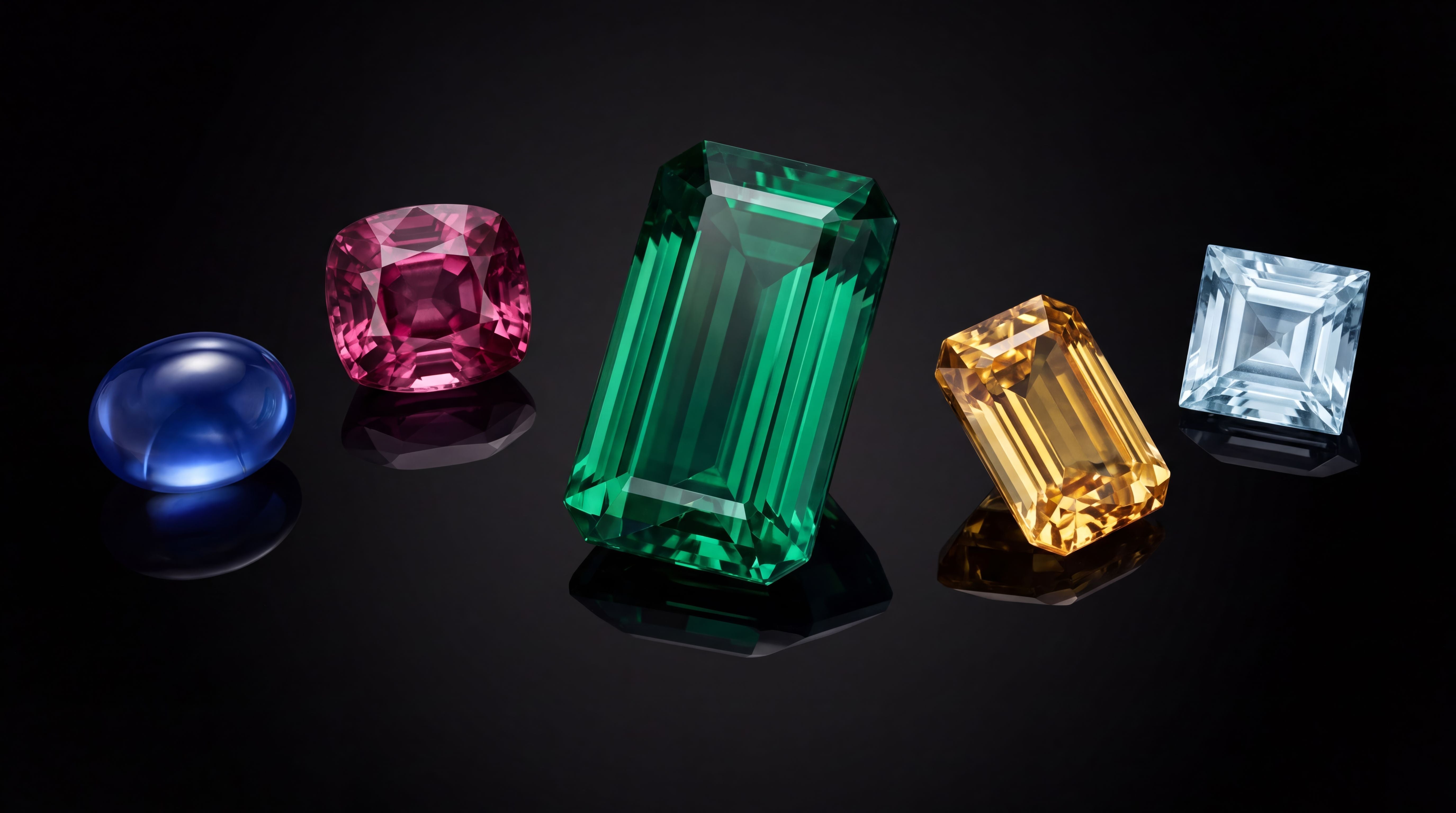
A gemologist reads color in three parts. Hue is the base color. Tone is how light or dark the stone appears. Saturation is how vivid or muted that color reads. A sapphire can hold a beautiful blue hue and still look grayish if saturation is low, or nearly black if the tone runs too deep. In the finest stones the three settle into balance, and the color looks rich, alive, and even across the face.
I check for color zoning, the uneven distribution of color through the crystal, from several angles. A shallow cut will expose what a well-proportioned stone would hide. I look at the stone under different lighting as well, because a gemstone that appears electric under LED jewelry lights can fall completely flat in daylight.
A stone can hold extraordinary color and still fail to show it to you. That part is the cut.
How Gemstone Cut Affects Color and Brilliance
Cut in colored gemstones is not graded the way it is in diamonds. There are no universal ideal proportions to measure against. What I evaluate instead is how well the cut returns light, spreads color evenly, and presents the stone without dead zones.
Rough material is expensive, and a cutter is usually paid by the carat. So fine rough gets cut deep to hold weight, and the stone pays for it in light. You see the result as windowing, a pale see-through zone in the center where light passes straight through instead of coming back, or as extinction, where dark patches form because light is absorbed rather than returned.

Why do some gemstones look dark in the center?
Almost always extinction, from excessive depth or steep pavilion angles. Tilt the stone slowly under a lamp and watch the middle of it. A well-cut gem stays lit as it moves. One cut too deep holds a dark patch that travels with your eye, and no setting and no lighting will lift it.
Depth changes face-up size dramatically. Two stones of identical carat weight can look nothing alike depending on where that weight sits. When too much of it hides below the girdle, you are paying for carats that disappear the moment the stone is set.

This matters most when choosing a gemstone for a custom ring, because the dimensions of the stone decide what the setting can be.
Color and cut are what a stone shows you. Clarity is what it contains.
Why Colored Gemstone Clarity Is Judged Differently
Colored gemstones should not be held to diamond clarity standards. Each species carries its own typical inclusion profile. Emeralds contain visible inclusions by nature. Fine rubies often show silk or rutile needles. High-clarity aquamarine is the norm rather than the exception. I judge clarity against what is typical for that variety, never against an absolute scale.
For most clients the practical benchmark is eye-clean: no inclusions visible at normal viewing distance. But some inclusions are purely cosmetic and others are not. A surface-reaching fracture or a large cleavage plane compromises the structure of the stone, and that is a different conversation entirely.
Transparency matters alongside clarity. A stone with few inclusions can still read hazy or sleepy if the material itself lacks transparency, and that mutes saturation in a way no setting will fix.
Gemstone Treatments and What They Mean for Value
Most colored gemstones in the market have received some form of treatment, and these sit on a spectrum of permanence and acceptance. Heat treatment of sapphire is permanent and broadly accepted. Oiling of emerald is standard practice, though the oil can dry over time and the stone asks for care because of it.
Diffusion and fracture filling sit at the other end. Less stable, less accepted in fine stones, and significant in what they do to value. As an AGTA member I disclose every enhancement. You know exactly what you are buying.
How do gemstone treatments affect value?
It depends on the treatment, on its stability, and on the stone itself. An unheated sapphire with fine color commands a premium because it is genuinely rare. A heated sapphire of comparable beauty remains a sound purchase at a different price. Neither is a lesser thing to own. What matters is that you were told.
For high-value purchases, particularly natural unheated sapphires, rubies, and emeralds, a laboratory report gives you independent verification of identity, origin, and treatment status. For less expensive stones a professional evaluation may be enough, but ask for documentation either way.
Gemstone Durability and Everyday Wear
Durability is more than hardness. Toughness, cleavage, and chemical sensitivity all decide whether a stone can take everyday wear. A sapphire at 9 on the Mohs scale handles daily life beautifully. An emerald or an opal asks for a more protective setting and more careful habits.
What is the best colored gemstone for everyday wear?
There is no single answer. It depends on the stone, on the setting built around it, and on how you live in your jewelry. Before you buy any colored gemstone, ask three things: what treatments it has received, how stable those treatments are for daily wear, and whether a gemologist has evaluated it with a laboratory report available.
Choosing a Gemstone for Custom Jewelry
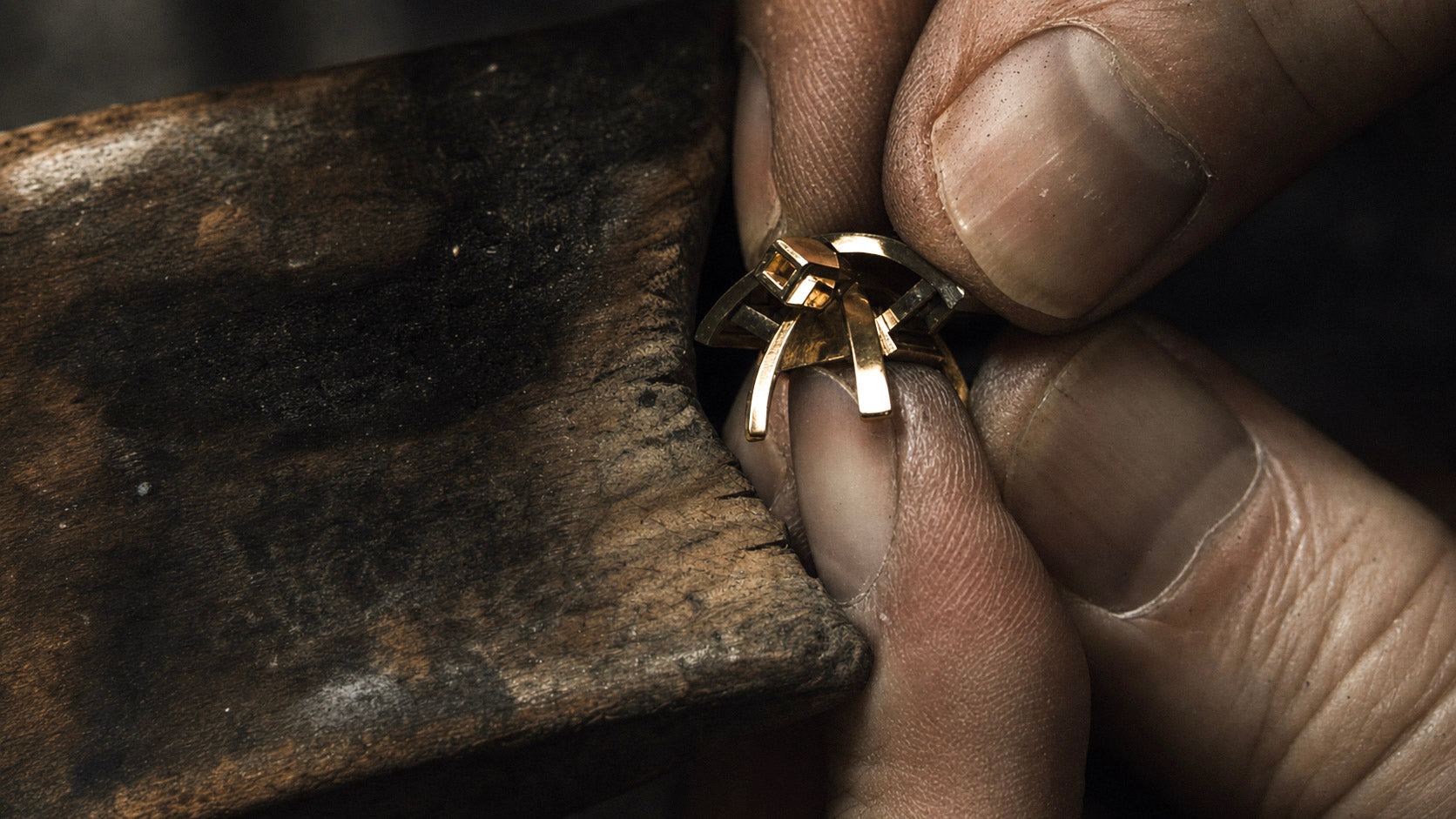
In custom work the stone and the design are not two decisions. They are one conversation, held from the beginning. Dimensions, depth, color, and durability shape the setting style, the metal color, the choice between prong and bezel, and how the finished piece sits on a hand.
A client once brought me a tourmaline she had bought abroad. The color was stunning. But it had been cut so deep that the low, delicate ring she pictured was not physically possible, not without recutting the stone and losing significant weight. Had we chosen it together, we would have found one whose proportions served the color and the design at once. That is the difference between buying a gemstone and choosing one.
Should you choose the stone first or the design first?
Either way works. Our custom jewelry process asks only that the two be considered together from the start. A gemologist who is also a designer looks at a stone with the finished piece already in mind: finger coverage, scale, how side stones will pair, whether a wedding band will sit cleanly against it, how the whole thing will wear in twenty years.
The best gemstone for a custom piece is not the largest, and it is not the most technically perfect. It is the one that balances color, presence, durability, character, and design potential for one particular person.
That balance is the foundation of our Works of Art Collection, where stone and design are born together rather than matched after the fact.
But you do not need me in the room to begin. Take the next colored stone you are shown and carry it to a window. Look for color that holds even across the face. Look for a center that returns light instead of swallowing it. Ask what it has been treated with, and notice how readily the answer comes. Those few habits will tell you more about a stone, and about the person selling it, than any figure on a tag.
When you find one worth building around, whether for an engagement ring, an anniversary, or the beginning of a collection, that is where a private consultation starts. Understanding you, understanding the stone, and seeing what the two become together.

Leave a comment
This site is protected by hCaptcha and the hCaptcha Privacy Policy and Terms of Service apply.