

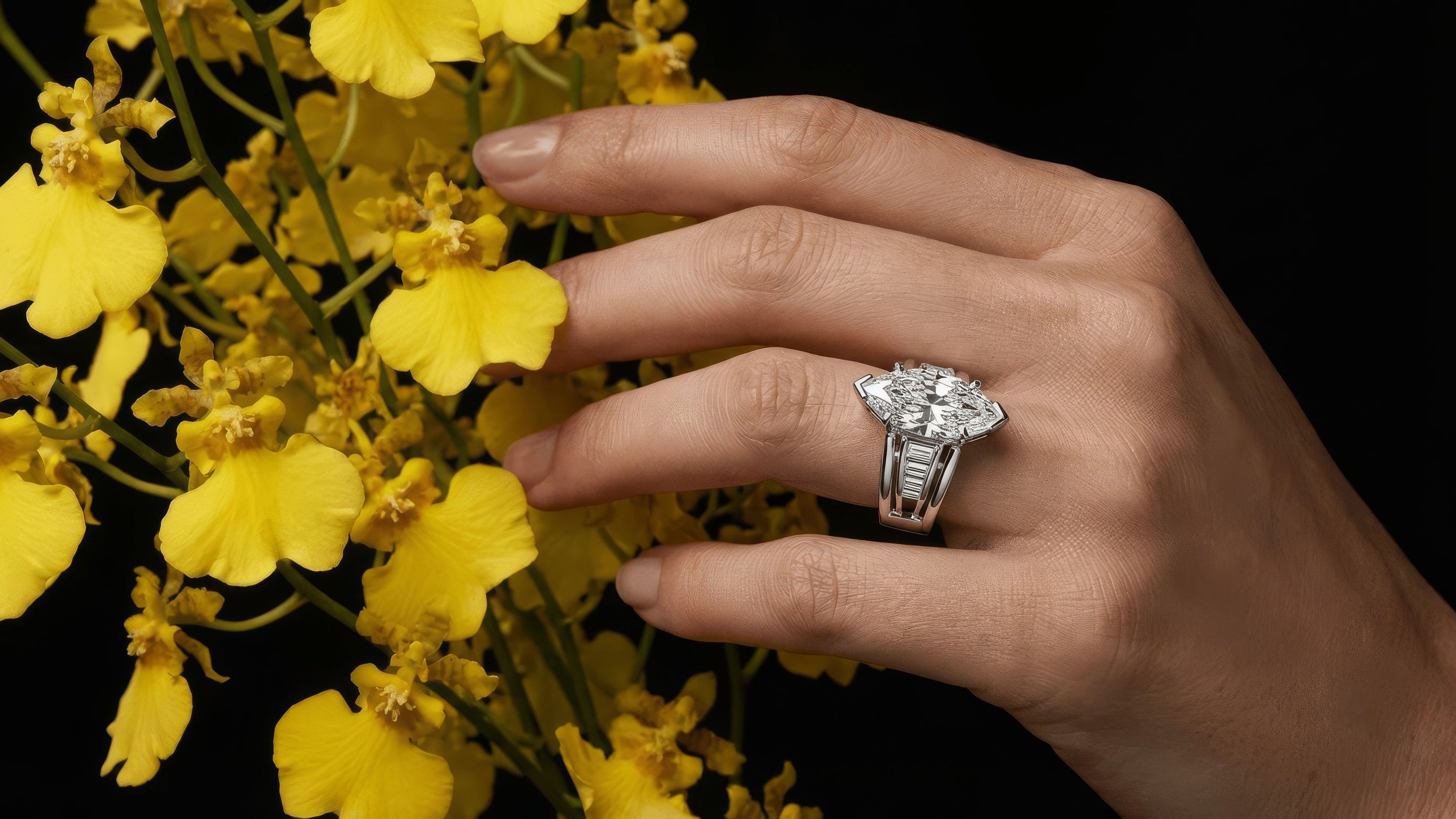
White Gold vs Silver vs Platinum: Which White Metal Is Best for Jewelry?
Three rings sit on my bench, all white, all polished. To most people, they look nearly identical.
But one will need replating in two years. Another will outlast the person wearing it without a single trip back for maintenance. And the third—silver—will tarnish within weeks if worn regularly.
In thirty years of making jewelry, the misconception between silver, white gold, and platinum is one of the most common conversations I have. These metals look similar at a glance, but that visual similarity hides enormous differences in durability, maintenance, and what the piece becomes over time. Understanding what separates them is the first real decision in creating something you'll wear for decades—or pass down entirely.
What Makes White Gold, Silver, and Platinum Different?

More often than not, people refer to any white metal as "silver" without knowing or understanding the difference.
When a client asks for a "white" or "silver-toned" ring, the conversation centers on three metals. None of them is universally the best. The right one depends on how you'll wear the piece, how long you want it to last, and what kind of maintenance you're willing to accept.
Platinum: Weight, Permanence, and Zero Maintenance
Platinum is a fundamentally different material. Where 14k white gold is 58.5% pure gold, platinum jewelry is typically 95% pure metal. That purity makes platinum one of the most reliable hypoallergenic jewelry metals available and the safest choice for clients with sensitive skin.
Is Platinum Heavier Than White Gold?
Here's what most people don't know: pure platinum is only about 11% heavier than pure 24k gold. But when clients pick up a platinum ring next to a 14k gold one, they notice it's 60% heavier. That's because 14k gold is alloyed with lighter metals to strengthen it, while platinum stays at 95% purity. The weight you feel isn't just density—it's purity. Pick up a platinum ring and a white gold ring of the same design, and the difference is immediate. That substantial feel is part of what makes the piece truly theirs.
Is Platinum More Durable Than White Gold and Silver?
Platinum does scratch, but here's the critical difference: when white gold scratches, metal is lost from the surface. When platinum scratches, the metal is displaced—pushed to the side rather than removed. Over decades, platinum doesn't thin out. It develops a patina, a soft, satin-like finish that many clients come to prefer over high polish.
Platinum handles the long game better than any other metal. If you need to resize a platinum ring years from now, the metal's density and integrity hold up through multiple modifications across generations. It is the definition of heirloom jewelry.
White Gold and Rhodium Plating
What Is White Gold Made Of?
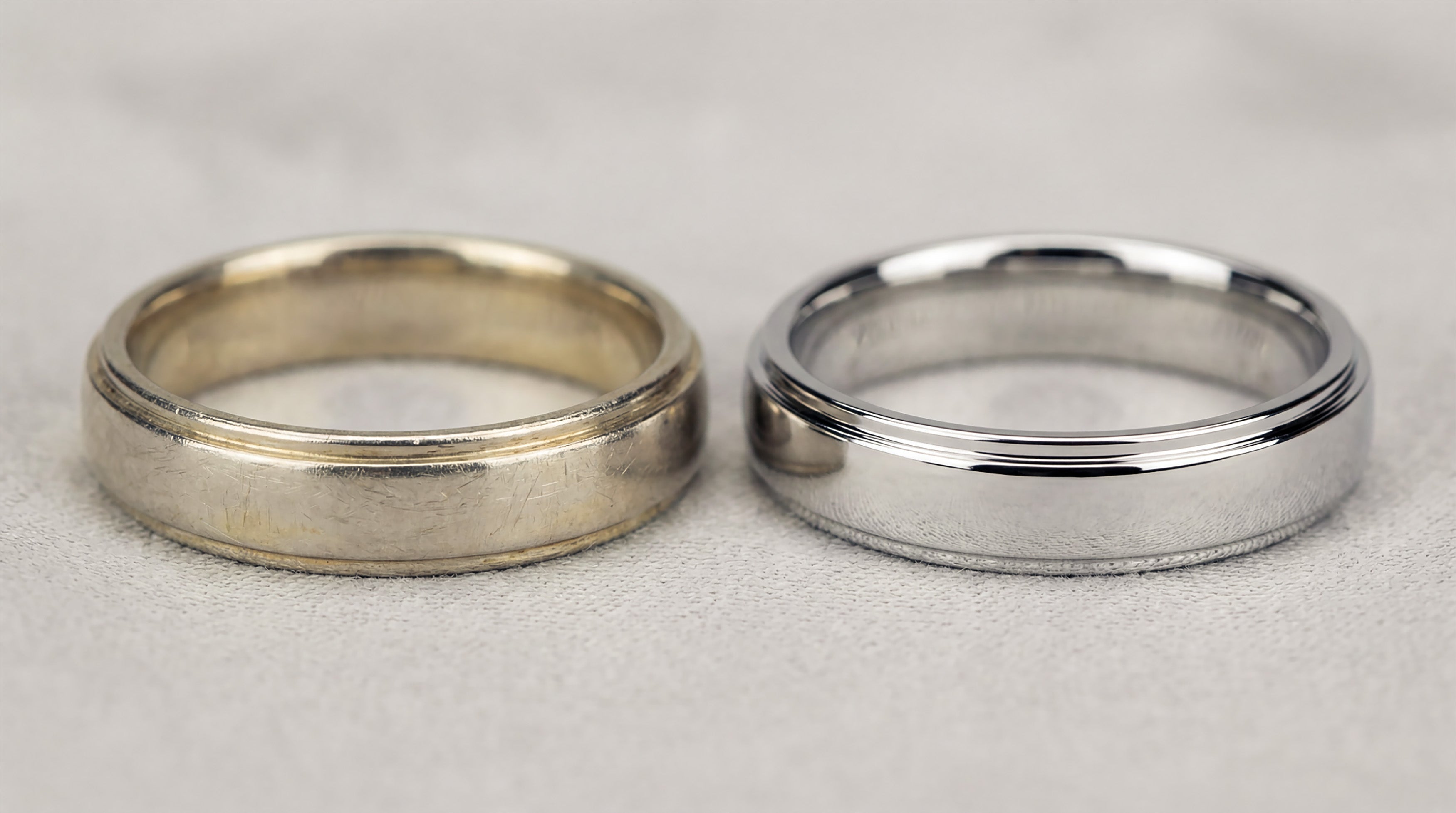
Here's what most people don't realize until they've owned white gold for a year or two: white gold is not naturally white. It's yellow gold mixed with white metals like palladium or nickel, then coated in a thin layer of rhodium plating to achieve that bright, reflective finish. Without rhodium, white gold has a warm, slightly grayish or champagne tone.
Why Does White Gold Turn Yellow Over Time?
This is why white gold turns yellow over time. The rhodium wears off gradually with daily contact—washing hands, putting on gloves, gripping a steering wheel. This isn't damage. It's simply how the metal works.
Why rhodium wears off:
- Daily hand washing
- Contact with lotions, soaps, or cleaning products
- Friction from gloves, gym equipment, or steering wheels
How Often Does White Gold Need Rhodium Replating?
The fix is straightforward. Rhodium re-plating restores the bright white finish and typically needs to happen every one to three years depending on wear. At Demirjian, this is one of the most common services we perform. A single visit brings the piece back to its original brightness.
The metal itself is strong, lighter in weight than platinum, and available in 14k and 18k options that balance hardness with gold purity. For clients who don't mind periodic upkeep and prefer a lighter feel on the hand, it's an excellent foundation for custom jewelry.
Is White Gold Hypoallergenic?
On skin sensitivity: nickel-based white gold alloys can cause reactions for some wearers. If that's a concern, we use palladium-based alloys—the hypoallergenic alternative within the white gold family. We always ask about metal sensitivities before we begin any design.
Sterling Silver Jewelry
What Is Sterling Silver Made Of?
Sterling silver is 92.5% pure silver alloyed with copper or other metals to give it enough strength for jewelry. Pure silver on its own is too soft to hold a stone or withstand daily wear.
Is Sterling Silver Durable Enough for Everyday Jewelry?
Silver tarnishes. Moisture, sulfur in the air, even your skin chemistry will darken it. For fashion pieces or jewelry you rotate seasonally, silver is a beautiful choice. But for daily-wear pieces like engagement rings or wedding bands, it has real structural limitations.
Silver also requires different equipment and fabrication techniques than gold or platinum. At Demirjian Jewelry Design, our focus has always been on heirloom-quality pieces—jewelry built to hold its integrity across generations. That's why we work exclusively in gold and platinum. These metals withstand daily wear without structural compromise, hold stones securely across generations, and can be resized or repaired decades later.
Is Platinum Worth the Extra Cost Over White Gold?
Platinum costs more for three clear reasons: the raw material is rarer and denser, meaning more of it is needed by weight to create the same ring. The purity is higher. And the labor is more specialized—platinum requires different tools, higher working temperatures, and a jeweler who knows how to work with it properly.
When Platinum Is Worth the Extra Cost
Here's when platinum is worth every dollar:
- You wear the piece daily and want zero ongoing maintenance
- You have sensitive skin or a history of metal reactions
- You want the piece to be worn by someone else someday—your child, grandchild, or beyond
- You prefer substantial weight on your hand
When White Gold Is the Smarter Choice
Here's when white gold is the smarter choice:
- You prefer a lighter ring
- You don't mind refreshing your jewelry every few years
- You want to allocate more budget toward a center stone or design detail
Both metals appear regularly in the custom work we do at Demirjian. The best metal is the one that fits the person wearing it.
How to Choose the Right Metal for Your Jewelry
Here's the simplest way I know to think about it: white gold is for beautiful everyday jewelry. Platinum is for pieces meant to outlast the person who wears them.
What to Consider When Choosing a White Metal
When choosing the right metal for a custom ring, consider four things in this order: how often you'll wear it, whether your skin reacts to certain alloys, what you want the piece to become over time, and then budget. That sequence matters because the first three answers usually make the fourth one clear.
This metal conversation is where every project at Demirjian begins—before a single sketch is drawn. It's the foundation that shapes everything from prong design to long-term care instructions. If you're starting to think seriously about a custom piece, this is the kind of detail we work through together from day one. Let's sit down and talk through it.

Leave a comment
This site is protected by hCaptcha and the hCaptcha Privacy Policy and Terms of Service apply.